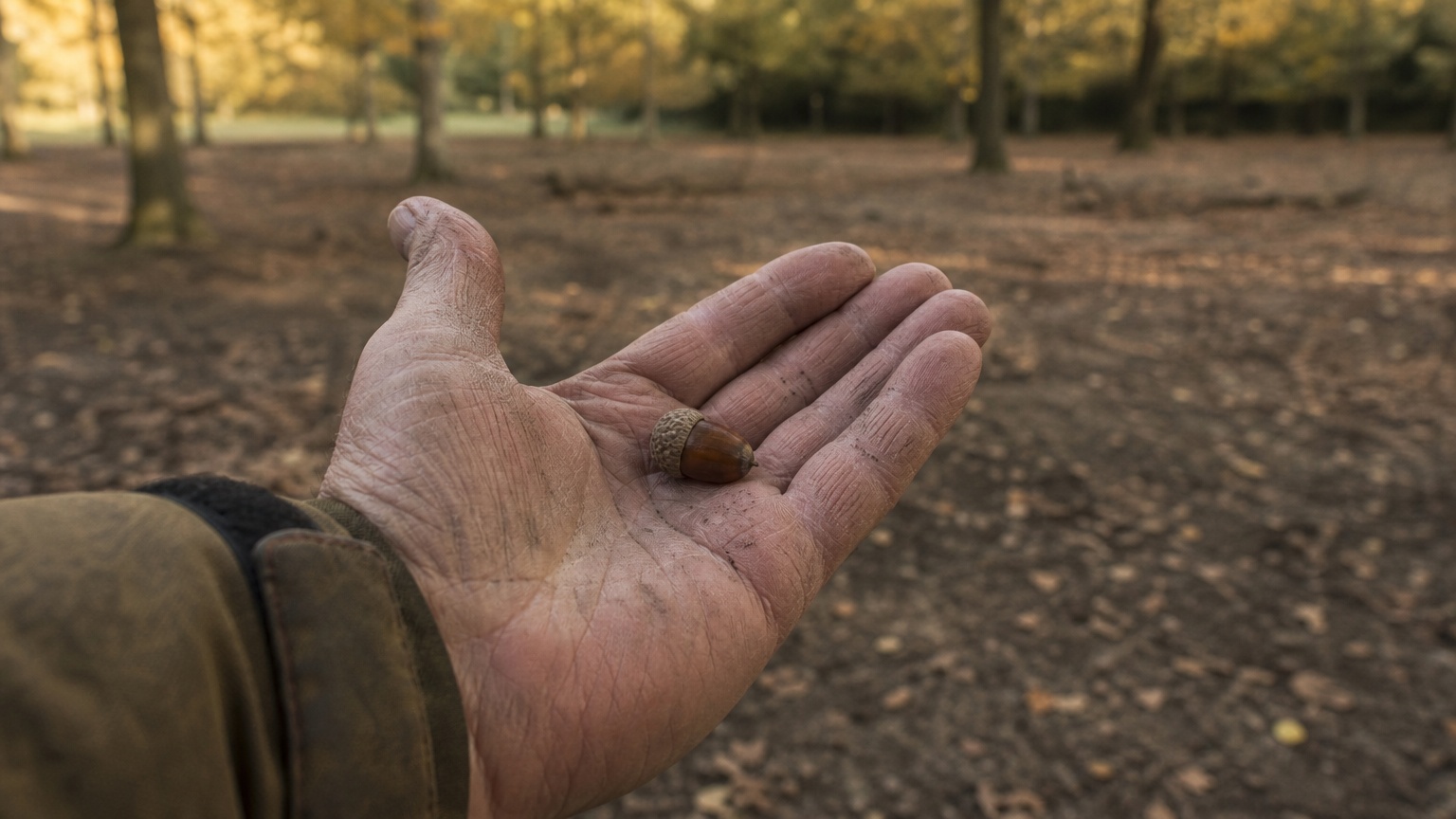
You may have noticed it on your walks, or seen it doing the rounds online: there are hardly any acorns about this autumn. No conkers for the children to squabble over, the squirrels looking faintly put out, and precious few acorns underfoot. The posts are right, it isn’t your imagination. Acorns, conkers and beech mast really are thin on the ground this year, and walnuts are likely light too.
The good news is that there’s nothing wrong. This is one of nature’s oldest rhythms doing exactly what it’s meant to.
Oaks, beech and horse chestnuts, the conker trees, don’t produce the same amount of seed every year. Every few years they have what’s called a mast year, when they all produce an enormous crop at once, and then take a year or two to recover with much lighter crops in between. Boom, then bust.
And last year was a proper boom. The Woodland Trust recorded 2025 as an exceptional year for acorns, in fact the biggest average crop they had logged in twenty years. As they point out, the year after a mast year is usually a lean one, the trees having rather spent themselves. So a sparse 2026 is exactly what you would expect. The oaks are simply having a quiet year and getting their breath back.
There’s a second reason it feels especially bare. Oaks are pollinated by the wind and need a warm, dry spring to set a good crop, so a cold, wet spring or a late frost knocks the numbers down further. Walnuts are a slightly different story, they aren’t a woodland mast tree, but their blossom is very sensitive to frost, so a chilly spring can give a poor walnut year at the same time. That is why people are seeing all three light at once. It is a few things stacking up rather than one. We can vouch for the walnuts first-hand, our own tree has barely a handful on it this year.
This summer piled on the pressure. 2026 has been named the hottest on record, with heatwave after heatwave and a long dry spell. When oaks are that stressed for water they will quietly shed some of the acorns they are carrying to protect themselves, and prolonged heat can bring on an early “false autumn” too, where trees drop leaves and fruit ahead of time. So on top of a natural off-year and a frosty spring, a baking summer gave the crop one more knock. Three things stacking up, rather than any one thing going wrong.
And the warmth has not let go. Even now, in the closing days of September, we are basking in temperatures nearer 25 degrees, more like high summer than the door to October, which is why it still doesn’t quite feel like conker weather at all.
Update, 3 October 2026: Good news from just up the road. Despite the worries about this year’s crop, organisers have confirmed the World Conker Championships will go ahead at Southwick, near Oundle, after concerns that the hot summer might have scuppered conker supplies. So the conkers are out there, you just have to look a little harder.
If you walk a dog, there is at least one upside to a lean acorn year: one less thing to watch on the path. Acorns don’t agree with dogs and are best kept well out of reach, so a bare autumn floor is, for once, a small blessing.
For the oaks themselves, there is nothing to worry about. It is a completely natural boom and bust cycle, older than any of us, and a bumper year will come around again before long.
This winter, though, could be a harder one for wildlife than usual. The animals that rely on the autumn crop, from jays and squirrels to mice, deer and the birds, are facing a lean acorn and conker year at the very same time as the heat has brought the hedgerows on early. That long, hot summer ripened the berries well ahead of schedule, a so-called false autumn, so much of the hawthorn, rowan and blackberry that would normally see wildlife through the cold months has already come and gone. Less in the trees, and the hedgerows stripped early, means there is simply less to go round when it is needed most.
It is a good year to be kind to the wildlife on your patch, and a few small things go a long way. Keep the bird feeders topped up through autumn and winter, leave a shallow dish of fresh water out, the drought has made that scarce too, and if you have windfall apples or a few berries in the garden, leave them where the birds and small mammals can reach them rather than clearing them all away. Little gestures, but in a winter like this one they count.
We are country folk here, and we notice these things. So if the oaks near you look bare, you are not imagining it, and if you can spare a little for the birds and the squirrels this winter, they will thank you for it.
With thanks to the Woodland Trust, The Tree Council and Sussex Wildlife Trust, whose work on mast years informed this piece.
Promotions, latest products and news directly to your inbox – opt out at anytime.