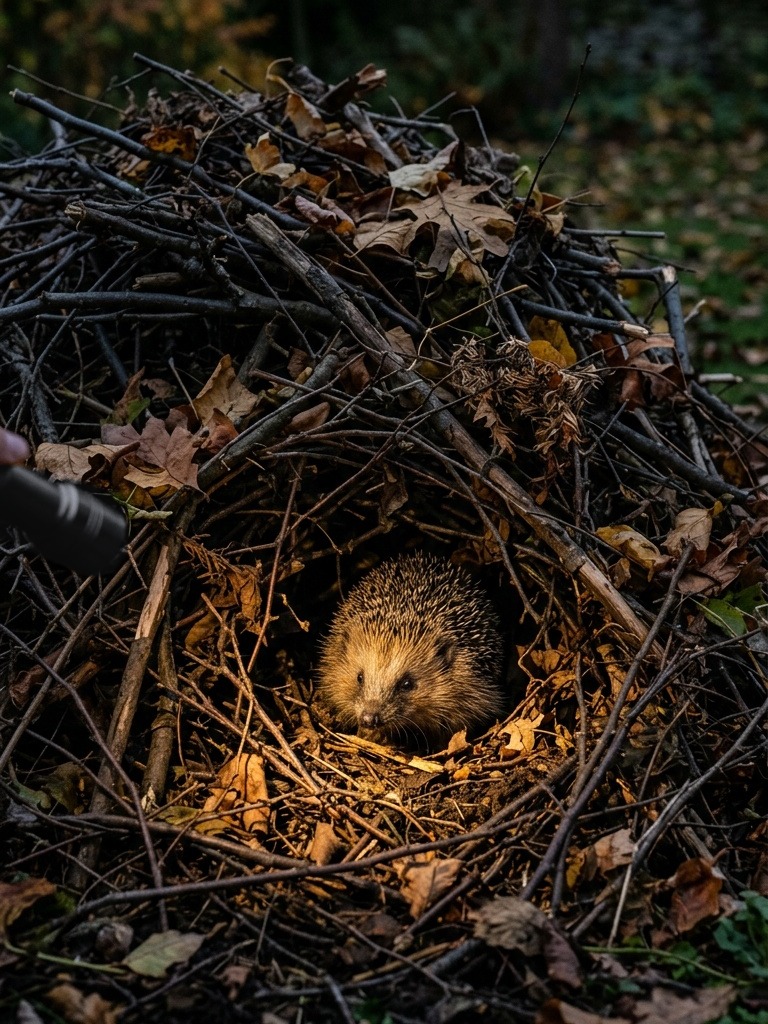
Yes, hedgehogs do hide in bonfires. To a hedgehog looking for somewhere snug to spend the winter, a pile of branches and leaves is the perfect home. The safest thing you can do is build your bonfire on the day you light it, check it carefully just before you strike the match, and light it from one side only so anything inside has a way out.
At this time of year hedgehogs are looking for a dry, sheltered spot to hibernate, and a bonfire stacked in the garden a week or two before the big night is exactly what they are after. As Fay Vass of the British Hedgehog Preservation Society puts it, a bonfire pile looks like a “5* hotel” to a hedgehog.
It isn’t just Bonfire Night. Autumn is when a lot of us cut back hedges and burn the trimmings, and any pile left for a few days is just as inviting.

They need all the help they can get. In 2020 the hedgehog was listed as Vulnerable to extinction on the Red List for British Mammals.
The British Hedgehog Preservation Society’s advice comes down to three steps: move it, check it, and give them a way out.
Move the materials to clear ground on the day you are going to light them. If your pile has been sitting there for a while, moving it is the best way to be sure nothing has moved in.
Check the pile just before you light it. Hedgehogs tend to tuck themselves into the middle and the bottom two feet of the heap. Lift it gently, a section at a time, with a pole or a broom. Never use a garden fork or a spade, as they can stab a sleeping hedgehog. A torch helps, and so does listening: a disturbed hedgehog makes a hissing sound.
Light the bonfire from one side only, so that anything you have missed has a way to escape.
Pop on a pair of gardening gloves or use an old towel, which protects your hands and helps keep the hedgehog calm. Pick it up with as much of its nest as you can and put it in a high-sided cardboard box with some newspaper, old towelling or straw. Make a few air holes and fasten the lid firmly, because hedgehogs are surprisingly good climbers.
Put the box somewhere quiet and well away from the fire, such as a shed or garage, and offer some meaty cat or dog food and a dish of water. Once the bonfire is completely out, release the hedgehog under a hedge, a bush or a log pile close to where you found it, along with its nesting material.
We put food out for the foxes at night, and they know exactly what time supper arrives. Put food out for hedgehogs around sunset and you may soon find you have a regular visitor too. Hedgehog Street suggests meaty cat or dog food or dry cat or kitten food, with a shallow dish of water, but never milk or bread: hedgehogs can’t digest milk, and bread does them no good at all. If foxes or cats share your garden, a simple feeding station made from bricks and a paving slab lets the hedgehogs in and keeps the bigger visitors out.
Bonfire Night is rarely just one night, and for many dogs the bangs and flashes are frightening. Dogs Trust and the RSPCA give very similar advice.
Walk your dog in daylight and be settled in at home well before the fireworks start. Close the windows and curtains, put the lights on, and have some music or the television on to soften the noise. Give your dog a safe space, and if they want to hide, let them stay where they feel safe.
If your dog comes to you for reassurance, Dogs Trust says to calmly give them attention and comfort, as research shows ignoring them won’t help. Try not to leave them on their own, never tell them off for being scared, and keep calm and carry on as normal yourself. It is also a good moment to check their microchip details are up to date, in case they bolt. If your dog really struggles, speak to your vet well ahead of time.
Plans for quieter fireworks went out to public consultation this year, which many dog, horse and livestock owners will welcome. For coats, leads and everything else for the country dog, have a look at our dog range or our guide Everything for the country dog.
Bonfire Night marks the failure of the Gunpowder Plot of 1605. A group of conspirators, Guy Fawkes among them, planned to blow up the House of Lords and kill King James I. On the night of 4 November the cellar beneath the House of Lords was searched at midnight, and in the early hours of 5 November Fawkes was found there with the gunpowder. Thirty-six barrels were later discovered.
When Parliament met in January 1606, it passed an Act making 5 November a day of thanksgiving every year. The day was soon marked with church bells and bonfires, and the Act stayed in force until 1859. The bonfires, and the “guy” that ends up on top, have outlasted it by well over 150 years. There is still a reminder at Westminster: the Houses of Parliament are searched by the Yeomen of the Guard before every State Opening.
Fireworks began in China. Somewhere between 600 and 900 AD, Chinese alchemists searching for an elixir of everlasting life mixed saltpetre, sulphur and charcoal, and made gunpowder instead. By the 10th century it was being used in fireworks.
In England, the friar Roger Bacon was experimenting with saltpetre in 1242, the earliest recorded use of gunpowder here. English Heritage counts the wedding of Henry VII and Elizabeth of York in 1486 as England’s first firework display, and by the time of Elizabeth I fireworks were so popular that she appointed a “Fire Master of England”. In 1749 George II had Handel write his Music for the Royal Fireworks for a great display over Green Park.
So when the rockets go up next week, you are watching something with more than a thousand years behind it. Just check the bonfire for hedgehogs first.
What’s the oddest place you’ve ever found a hedgehog tucked up for the winter? A log pile, the compost heap, a welly? Do tell us.
Where this comes from: British Hedgehog Preservation Society bonfire advice; Hedgehog Street (Red List for British Mammals, 2020, and feeding advice); Dogs Trust and RSPCA fireworks advice for dogs; UK Parliament and Royal Museums Greenwich on the Gunpowder Plot; Smithsonian Magazine, Encyclopaedia Britannica and English Heritage on the history of fireworks.
Last updated: 27 October 2026
Promotions, latest products and news directly to your inbox – opt out at anytime.
