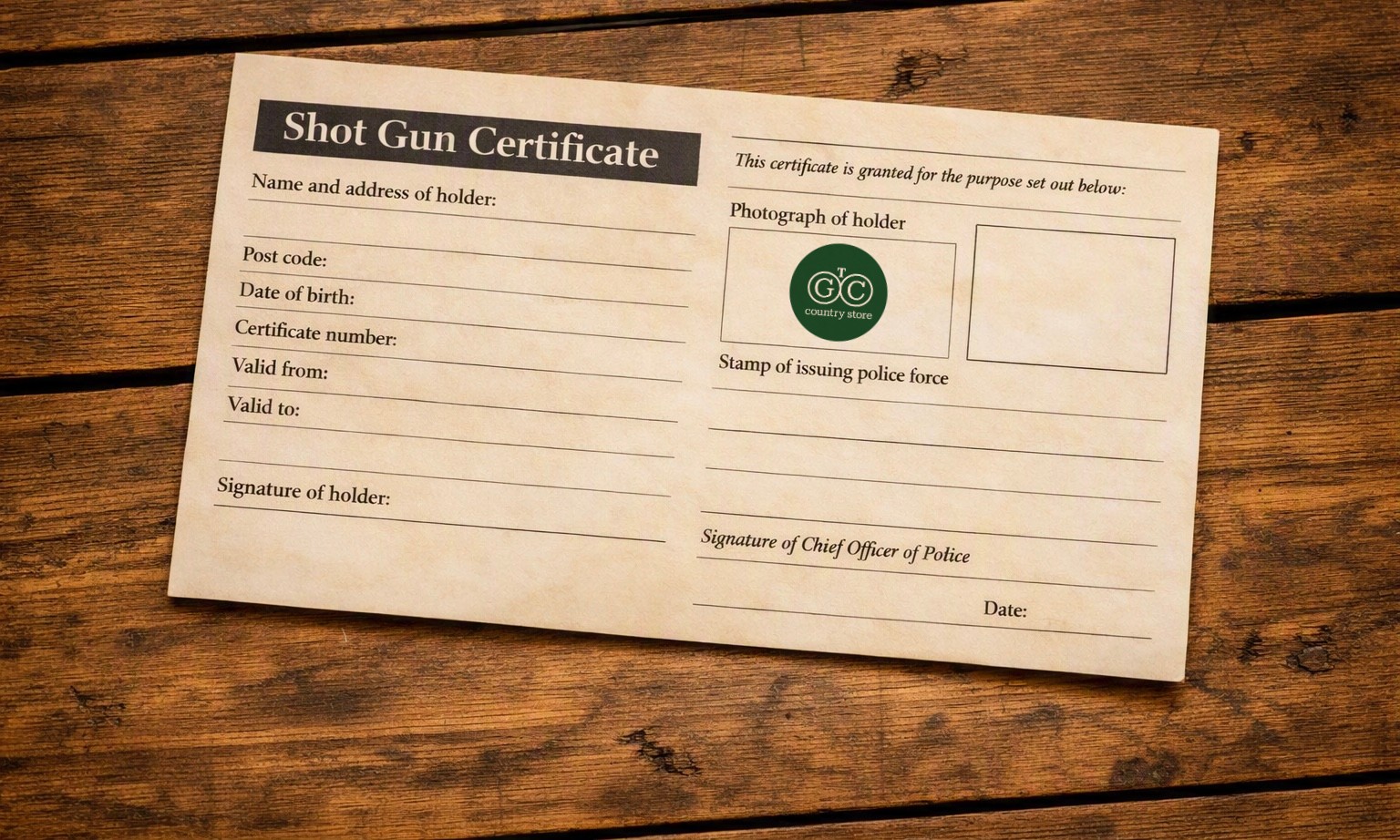
If you hold a shotgun or firearm certificate, new firearms licensing rules came into force on 29 September 2026. The new medical condition is added to certificates when they are granted or renewed from that date, so if you already hold a certificate it will apply from your next renewal. Here is the plain version of what has changed, and the one date worth putting in the diary.
In short: certificates granted or renewed from 29 September 2026 carry a condition that you tell your police force without undue delay about a relevant medical condition, the new application form asks about everyone in your household and any second home where your guns will be kept, and applications on the old form are only accepted if they reach the police by 29 October 2026.
The Firearms (Amendment) Rules 2026 were announced by the Home Office and took effect straight away on 29 September. They cover England, Scotland and Wales. Northern Ireland has its own licensing system. There are three main changes.
Certificates granted or renewed from 29 September 2026 include a condition that the holder tells their police force if, during the five-year life of the certificate, they are diagnosed with or treated for a relevant medical condition, or if an existing condition gets worse. It also covers advice or treatment from a doctor outside your own GP practice, so private and online consultations count too.
If your certificate was granted before 29 September, this condition is not on it yet. It will be added when you next renew. If you are unsure, check the conditions printed on your own certificate.
The relevant conditions are the ones listed in the Medical Information section of the application form. On the new Form 201 these are: acute stress reaction or a reaction to trauma, including PTSD; suicidal thoughts, self harm or harm to others; depression or anxiety; dementia; mania, bipolar disorder or a psychotic illness; a personality disorder; a neurological condition such as multiple sclerosis, Parkinson’s, Huntington’s or epilepsy; alcohol or drug abuse; and any other mental or physical condition you think may be relevant.
The condition says you must tell the police force that granted your certificate without undue delay. There is no fixed number of days, so the sensible approach is to let them know promptly and keep a note of what you told them and when. The form also advises letting the police know if you change your GP practice, with the new practice’s contact details, and on certificates granted or renewed from 29 September that is a condition too. Once this condition is on your certificate, telling the police about a relevant medical condition is a legal requirement: under the Firearms Act 1968 it is an offence not to keep to a condition of your certificate, so it is worth taking seriously.
The new application form asks for details of everyone living in your household, including your spouse or partner and anyone under 18. The Home Office says this helps police spot any wider safety concerns.
If you have a second home where your guns will be kept from time to time, you now need to declare it on the application form, so the police can check the security there and let the force covering that address know. The form’s notes say a long-term rental with a tenancy agreement counts, but temporary accommodation such as a holiday let does not.
An application on the old form is only accepted if it reaches your police force on or before 29 October 2026. After that, only the new Form 201 will be accepted for a grant or renewal. If yours is coming up, download the new Form 201 from GOV.UK (the September 2026 version) or your force’s website rather than using a copy you saved earlier.
No. These new rules are separate from the proposed changes to shotgun licensing that keep appearing in the headlines, which are still only at the talking stage. We covered those in Shotgun Licensing: The Story So Far. And if you are wondering how long a grant or renewal might take where you live, have a look at our article on how each police force measures up.
For most certificate holders, day to day, very little changes. But once the new condition is on your certificate, from your next renewal or a new grant, you must report a relevant medical condition at any time during the life of the certificate, not just at renewal time, so it is worth knowing about.
We are a gun shop, not a licensing department, so if you are unsure how any of this applies to you, your force’s firearms licensing team is the right place to ask. BASC and the Countryside Alliance have both covered the changes in detail too. And as ever, you are welcome to pop in and talk it through with us at Castle Ashby.
Where this comes from: The Firearms (Amendment) Rules 2026 (legislation.gov.uk) and the new Form 201, September 2026 version (GOV.UK).
Last updated: October 2026.