Few jackets are as recognisable as a Barbour. Olive wax, a corduroy collar, a flash of tartan inside, and usually a few years of mud and memories on the outside. With more and more old Barbours changing hands, we thought it was a good time to tell the story of where they came from, and how to tell the age of yours from the label.
In 1894, John Barbour, a Scot from Galloway, set up in South Shields in the North East of England. He supplied oilskins and other hard-wearing garments to the people who worked on that stretch of coast, sailors and fishermen among them, facing everything the North Sea could throw at them. The company’s own brand in those early days was called Beacon.
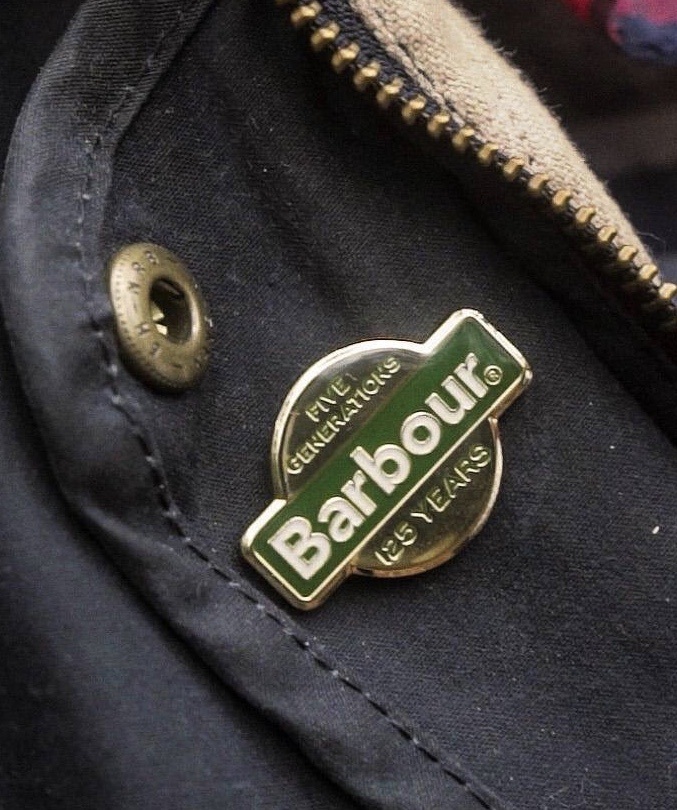
In 1908, Malcolm Barbour produced the first mail order catalogue. It carried the name well beyond South Shields, to farmers, fishermen and outdoor workers who needed clothing that would stand up to real weather.
In 1936, Duncan Barbour brought out a one-piece waxed motorcycling suit, the International, named after the International Six Days Trial. It became a favourite with riders, and in 1964 Steve McQueen and the American team wore Barbour Internationals to compete. After the war, from 1947, ordinary motorcyclists took to the International too.
During the Second World War, Barbour made a two-piece version of the International suit for the submarine service. Known as the Ursula suit, it became standard issue for submariners.
In 1969 Barbour introduced the Durham, a lightweight hooded wax jacket with caped shoulders to shed the rain, made for fishing, stalking and long days outdoors. More than fifty years on, it is still in the range as the Classic Durham.
Margaret Barbour joined the board in 1968 and became Chairman in 1973. She went on to design the jackets most of us picture when we hear the name.
In 1981 Barbour moved into a new factory at Simonside in South Shields, where the classic wax jackets are still made today. Margaret was made a Dame in 2001, and her daughter Helen Barbour has been Vice Chair since 1997, the fifth generation of the family.
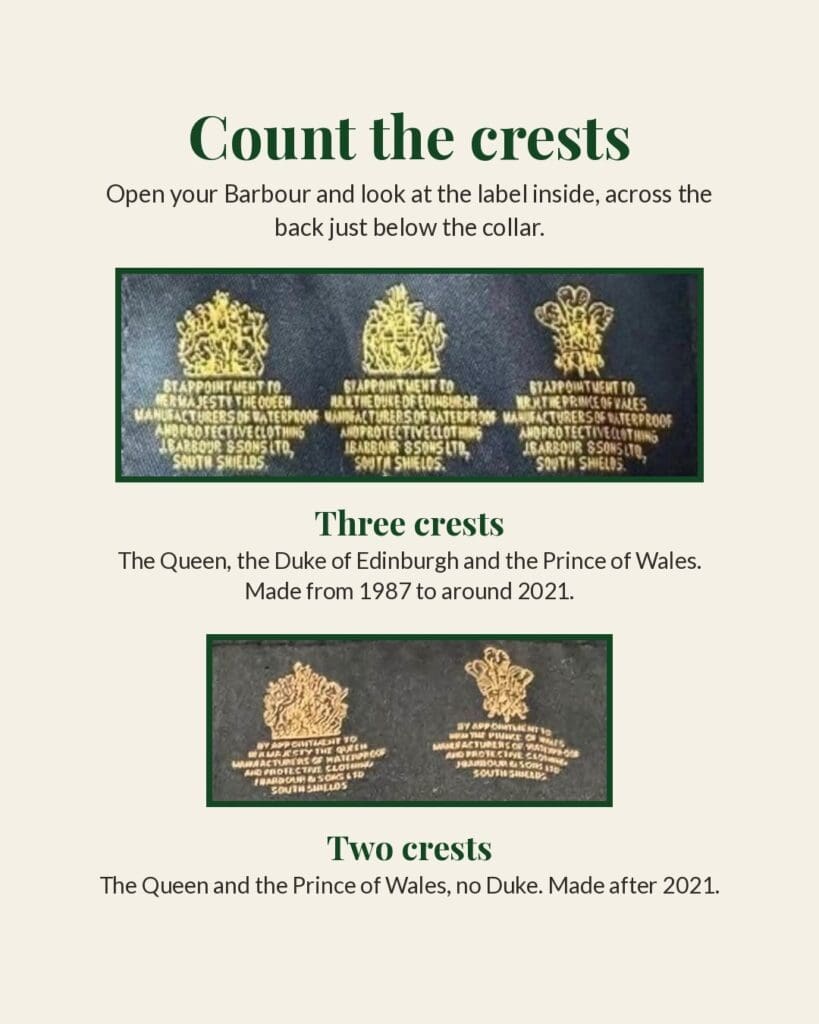
Barbour received its first Royal Warrant from the Duke of Edinburgh in 1974, a second from the Queen in 1982, and a third from the Prince of Wales in 1987. Those warrants appear as crests on the label, and they turn out to be one of the best clues to a jacket’s age.
A royal warrant belongs to the person who grants it, not to their title. So the Duke of Edinburgh’s warrant ended when he died in 2021, and the Queen’s when she died in 2022. Companies are allowed to keep showing the royal arms for up to two years afterwards, which is why the labels changed gradually rather than overnight.
The Prince of Wales warrant carried on when he became King, and in 2024 Barbour was granted a Royal Warrant by His Majesty the King.
None of this makes an older jacket any less genuine. The crests simply record when it was made, which is exactly what collectors love about them.
Open the jacket and look at the label sewn inside, across the back just below the collar, and count the crests above the Barbour name. The crests were added one at a time, so as a rough guide:
So if your label has a single crest, check which one it is. The Duke’s means one of the earliest; the King’s means one of the newest.
On many older jackets there is also a small white label, and the first two digits on it often give the year it was made, so “92” would mean 1992. Newer jackets use season codes instead, such as AW14 for autumn and winter 2014. The Classic Barbour Tartan lining arrived in 1998, so a different tartan inside can also point to an older jacket.
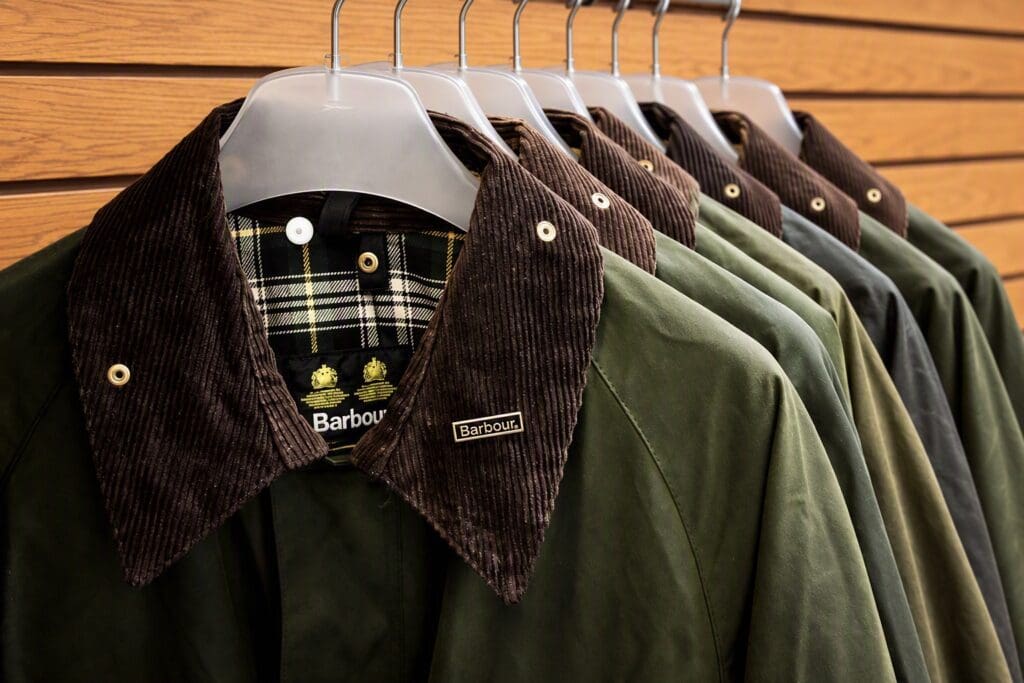
Collectors go for the classic wax jackets, the Bedale, Beaufort and Border, rather than the newer fashion ranges. They often look for the older one and two crest labels, which are rarer, “Made in England” at the Simonside factory, and the older chest sizing such as C40 rather than S, M or L. A jacket that has been worn, loved and rewaxed over the years often has more character than one that has sat unworn in a cupboard.
Barbour is busier than ever. In the year to April 2025, its sales rose by 9% to just over £350 million, and womenswear now makes up almost half of everything it sells.
The classics are still the backbone of the range. Barbour itself names the Bedale and the Beaufort among its most popular men’s wax jackets, and the Beadnell for women. First introduced in 2010 and named after a small fishing village in Northumberland, the Beadnell has become the ladies’ favourite, and it is the jacket most people find us through on Google too.
Alongside them sit the newer favourites. The Ashby, from 2011, is a longer, slimmer take on the Bedale. The Sapper borrows its looks from military field jackets, with plenty of pockets and a hood that tucks away in the collar. The Corbridge gives a more tailored, modern shape.
Barbour also keeps going back to its archive. In 2025 it brought back the Spey fishing jacket, and a full-length waxed trench based on the barn coats it made for farmers in the 1970s and 1980s.
Part of the appeal is that a Barbour is not meant to be thrown away. Barbour’s own repair service re-waxes over 60,000 jackets a year, and its Wax for Life and Re-Loved schemes are all about keeping jackets in use for as long as possible. Plenty of the jackets you see today are older than the people wearing them.
To keep yours going, give it a fresh coat of wax, such as Barbour’s own Thornproof Dressing, when it starts to look dry or pale, often once a year at the end of the season. Let it dry naturally, and keep it away from radiators and open fires.
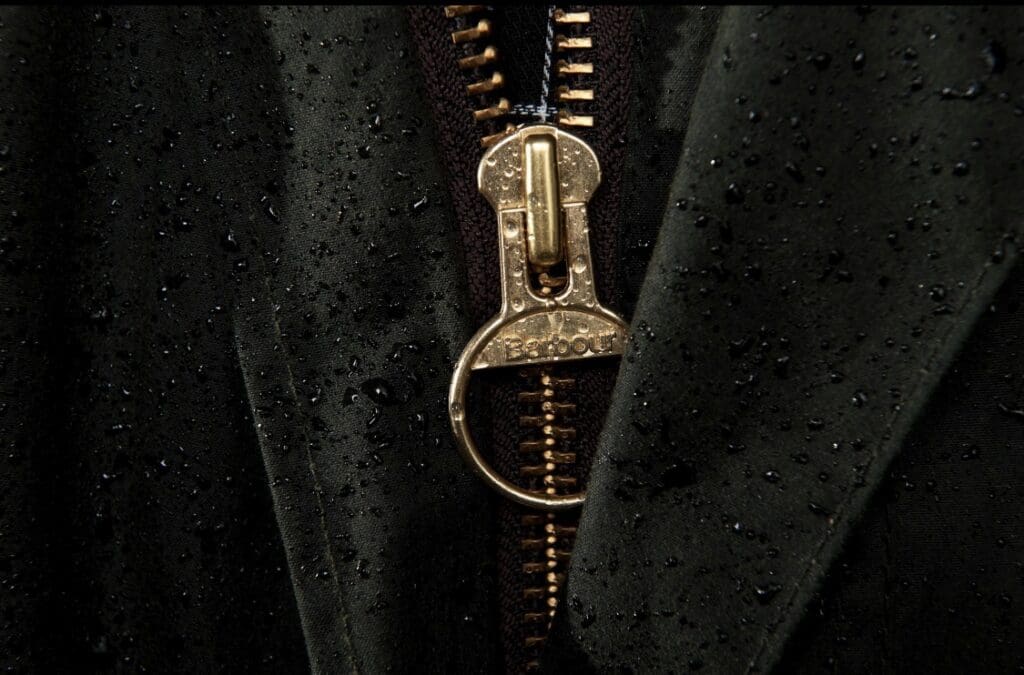
We hear it all the time in the shop: “I had a Barbour years ago, it must be in the loft somewhere.” If that sounds like you, it might be worth digging it out. Open it up, find the label inside across the back, count the crests and see when yours was made. Collectors often look for the older classics, and even a tired old jacket can usually be brought back to life with a fresh coat of wax. We would love to see what you find.
Whether you are after your first Barbour or adding to the collection, you will find our Barbour jackets online and in store at Castle Ashby, including the ladies Beadnell, the Sapper and the Classic Durham. Come in, try a few on, and start writing your own chapter of the story.
Promotions, latest products and news directly to your inbox – opt out at anytime.